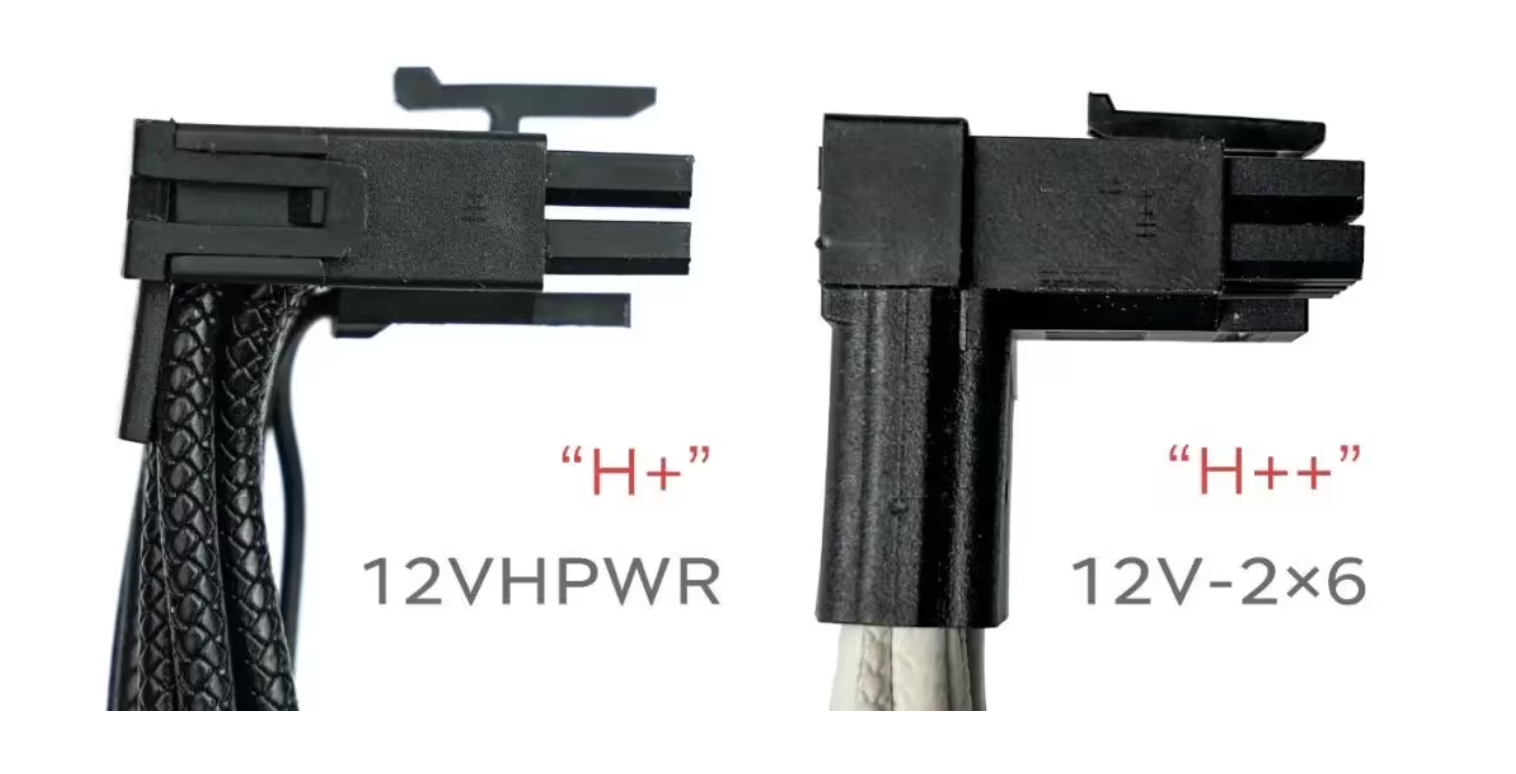
Among recent high-end GPUs, the power connector that gets discussed most often is probably 12VHPWR and the newer 12V-2x6. Both look like 16-pin connectors, using a 12 + 4 layout, but they are not exactly the same interface.
In simple terms, 12V-2x6 can be understood as a revision of the earlier 12VHPWR design under ATX 3.1 and PCIe CEM 5.1. It keeps the high-power output capability, but uses a more conservative design for insertion detection and terminal structure. The goal is to reduce the risk of the connector continuing to carry load when it is not fully seated.
01 Cable Differences Are Small
The first question many people care about is whether 12V-2x6 and 12VHPWR modular cables can be used interchangeably.
Looking only at the cable itself, the difference is usually not large. The real change is mainly on the board-side connector, such as the GPU socket or the modular power-supply backplate socket. Both newer 12V-2x6 modular cables and older 12VHPWR modular cables are still intended for 16-pin GPU power delivery.
So compatibility should not be judged only by cable length, wire gauge, or appearance. The GPU-side and PSU-side socket specification, terminal quality, and the power-supply vendor’s official compatibility statement matter more.
02 Key Mechanical Changes
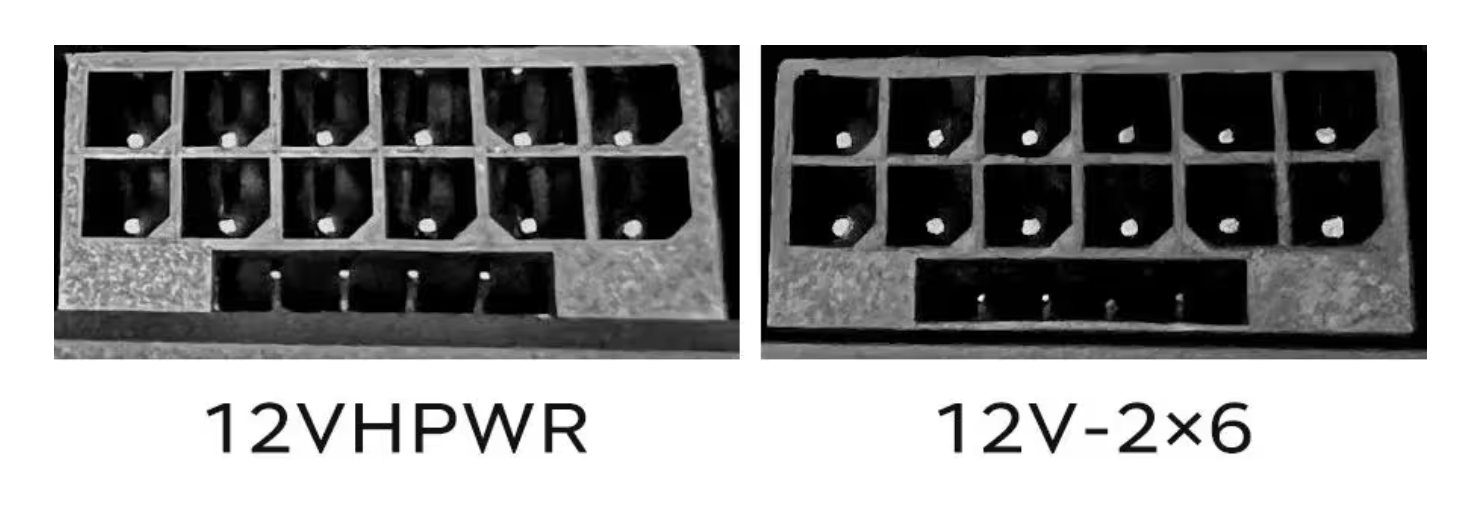
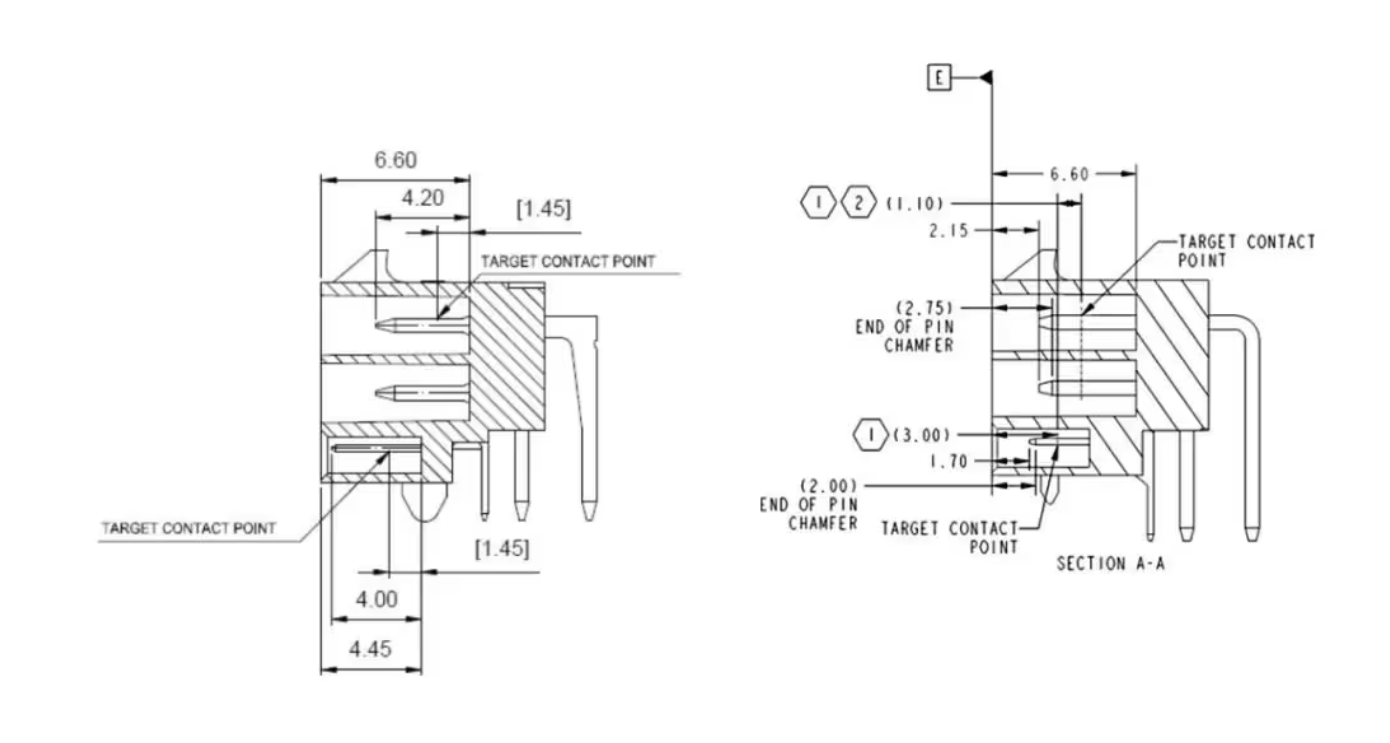
The point of 12V-2x6 is not to completely change the outer shape of the connector, but to adjust the pin structure.
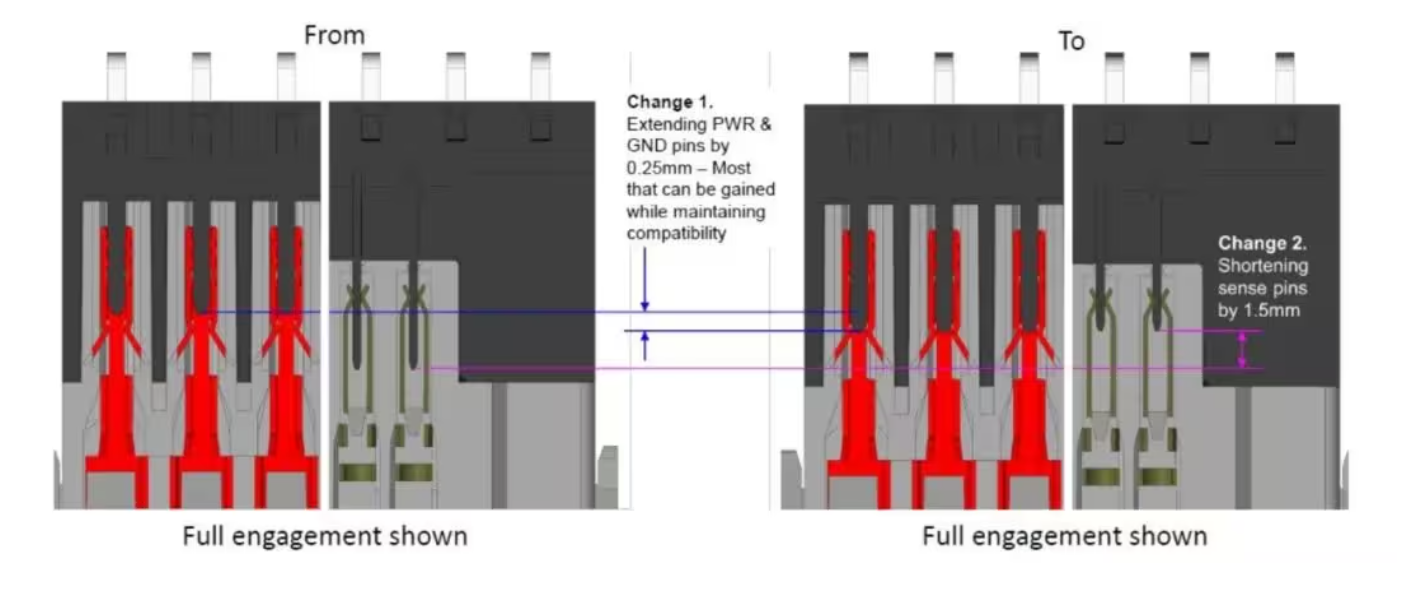
Its 12 main power pins are longer and make contact earlier, while the 4 SENSE signal pins are shorter and make contact later. The logic is straightforward: only when the connector is inserted deeply enough should the SENSE pins conduct correctly, allowing the GPU to identify the intended power capability.
This change targets a typical problem exposed by early 12VHPWR connectors: the plug may look inserted, but may not actually be fully seated. Under high load, insufficient contact can generate heat, and in severe cases may burn the plug or socket.
03 More Conservative SENSE Logic
| SENSE0 | SENSE1 | Initial Power (Power Up) | Max Sustained Power |
|---|---|---|---|
| Ground | Ground | 375 W | 600 W |
| Open | Ground | 225 W | 450 W |
| Ground | Open | 150 W | 300 W |
| Short | Short | 100 W | 150 W |
| Open | Open | 0 W | 0 W |
The safety improvement in 12V-2x6 centers on the SENSE logic.
In the newer definition, if SENSE0 and SENSE1 are in the Open floating state, the GPU will not power up normally or will not enter the corresponding high-power input state. In other words, when the connector is not seated properly, the system is more inclined to prevent operation instead of letting the GPU keep drawing power.
This is more conservative than early 12VHPWR. In older designs, even if the SENSE state was not ideal, some cases could still allow a certain level of power input. For high-power GPUs, that tolerance can become a risk.
Shortening the SENSE pins is essentially a way to make “fully inserted” a stricter prerequisite.
04 What H++ Means
Newer 12V-2x6 connectors often carry an H++ mark. It indicates that the connector terminals support 9.2A or higher current capability, distinguishing them from earlier 12VHPWR connectors marked H+.
It is worth noting that H++ does not mean the connector’s power limit rises beyond 600W. Whether new or old, the common upper limit for this 16-pin GPU power scheme is still 600W. H++ is better understood as terminal-specification and connector-version identification, not simply “higher wattage.”
05 What It Means for PC Building
For everyday PC building, the biggest value of 12V-2x6 is reducing insertion-related risk, but it is not a magic shield.
When using this kind of connector, it is still worth paying attention to a few things:
- Fully insert the plug; do not rely only on whether it “looks inserted.”
- Avoid bending the cable sharply right next to the GPU connector.
- Do not let the side panel force pressure onto the cable.
- Prefer original, custom, or adapter cables explicitly supported by the PSU or GPU vendor.
- Avoid cheap adapters of unknown origin on high-power GPUs.
If the case is tight, a 90-degree L-shaped cable or vendor-certified custom cable can reduce bending pressure. Still, terminal quality, wire gauge, and vendor certification matter more than appearance.
06 Quick Summary
12V-2x6 is not a connector that is “basically the same as 12VHPWR because it looks the same.” Its real changes are inside the connector structure and detection logic.
You can think of it this way:
- The cable form is similar, but board-side connector and terminal design are more important.
- The main power pins are longer, while the SENSE pins are shorter.
- When the connector is not fully seated, the newer design is more likely to prevent the GPU from entering a working state.
- The
H++mark identifies terminals with higher current capability. - The common GPU power limit is still
600W.
If you are building a system with a high-power GPU, 12V-2x6 is indeed more reassuring than early 12VHPWR. But the final safety still depends on whether the plug is fully seated, cable quality, PSU design, and case cable-management space. A better connector standard does not make careless installation safe.