GPIO 8 Common Modes
GPIO (General Purpose Input/Output) is used to interface with external circuits. On STM32/PY32, common modes include:
- floating input
- pull-up input
- pull-down input
- analog input
- push-pull output
- open-drain output
- alternate-function push-pull
- alternate-function open-drain
Input Modes
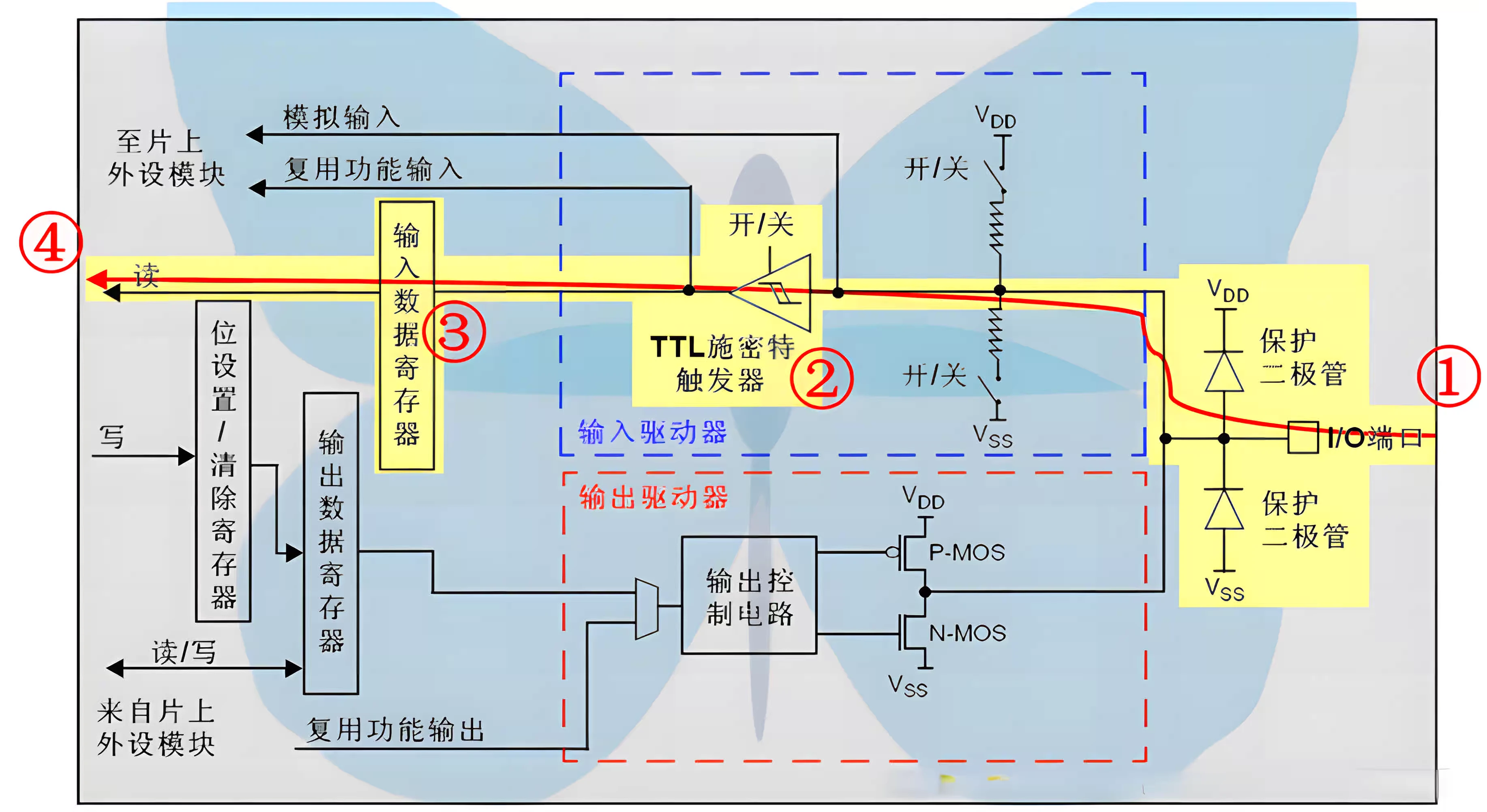
Floating input (GPIO_Mode_IN_FLOATING)
The pin is high-impedance and not internally pulled up/down. External circuitry determines level.
|
|
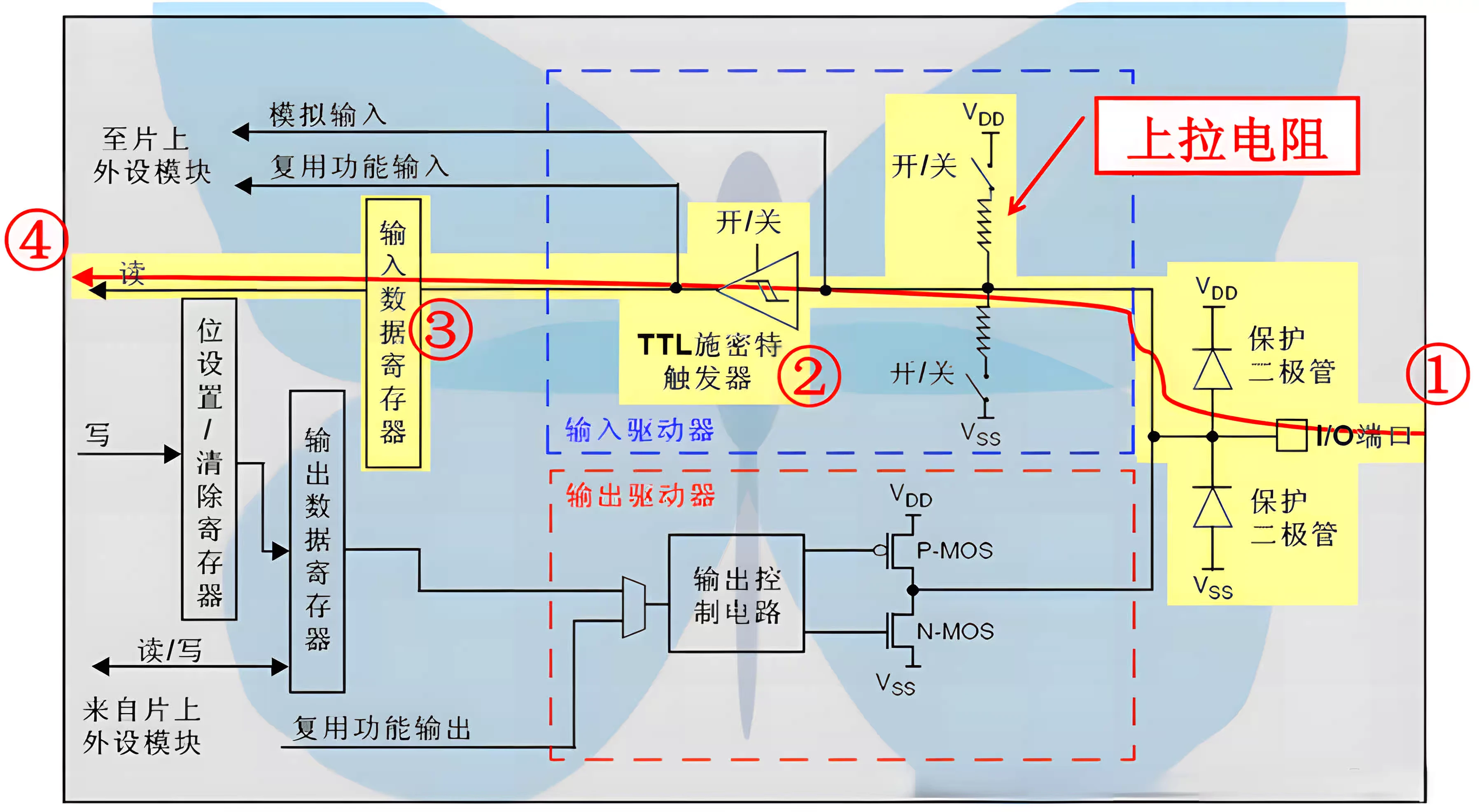
Pull-up input (GPIO_Mode_IPU)
Internal pull-up resistor keeps default level high.
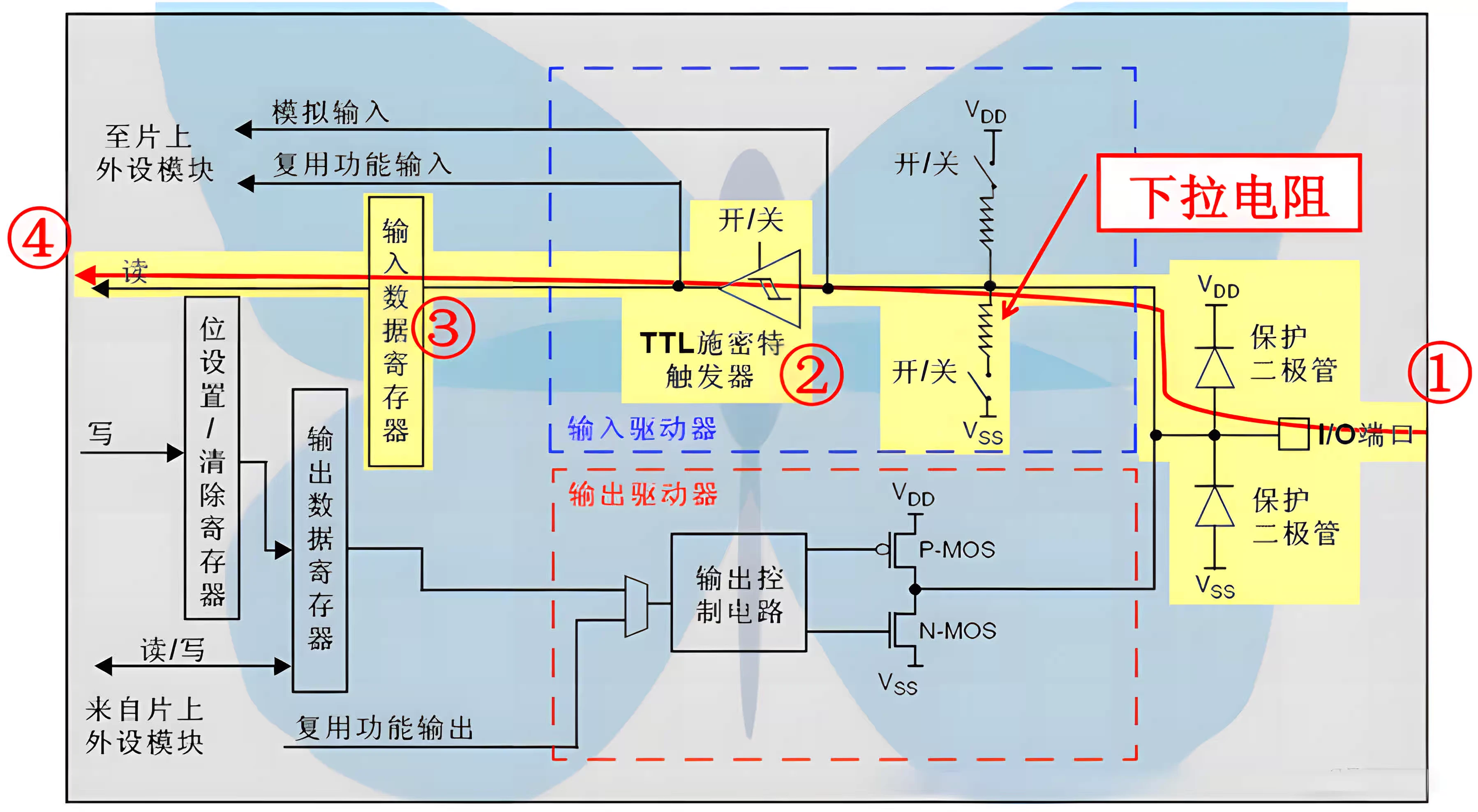
Pull-down input (GPIO_Mode_IPD)
Internal pull-down resistor keeps default level low.
Output Modes
Push-pull output
Can actively drive both high and low levels. Good for general digital output.
Open-drain output
Can actively pull low; high level typically provided by pull-up resistor. Useful for shared bus (for example I2C-like signaling).
Analog Mode
Analog mode disconnects digital input/output path and is used for ADC/analog signals.
Practical Selection Tips
- Button input: pull-up or pull-down.
- LED/general control pin: push-pull output.
- Wired-AND/shared line: open-drain + pull-up.
- ADC pin: analog mode.